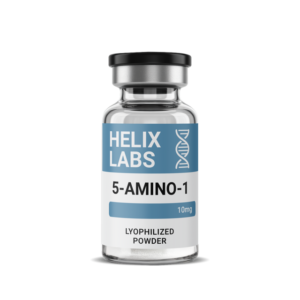
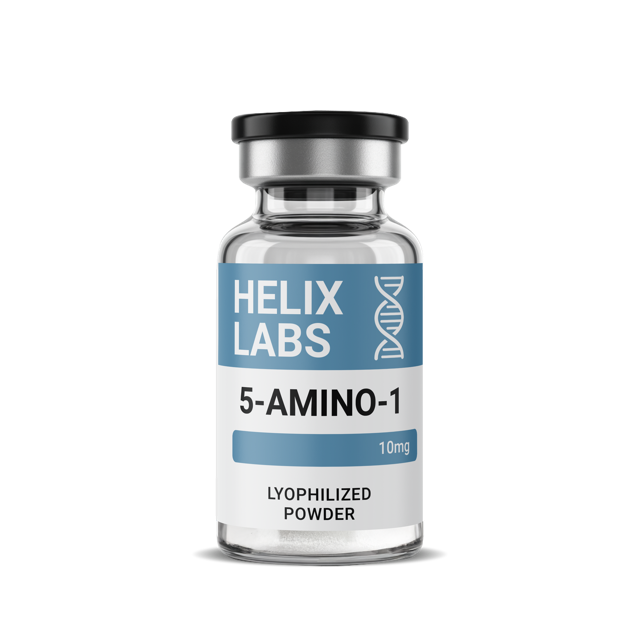
5-Amino-1MQ | 10mg Lyophilized Peptide
The Selective NNMT Inhibitor
5-Amino-1MQ (5-amino-1-methylquinolinium) is a small-molecule, membrane-permeable cation that functions as a potent and selective inhibitor of Nicotinamide N-methyltransferase (NNMT). NNMT is a cytosolic enzyme predominantly expressed in adipose tissue and the liver, where it plays a critical role in energy homeostasis.
In research settings, 5-Amino-1MQ is studied for its ability to increase intracellular NAD⁺ levels and activate the Sirt1 pathway, making it a primary subject for investigations into obesity, metabolic dysfunction, and skeletal muscle senescence.
Technical Specifications
| Feature | Details |
| Purity | 99% (Validated by HPLC) |
| Concentration | 10mg per vial |
| Molecular Formula | C_{10}H_{11}N_{2}^{+} |
| Molecular Weight | ~159.21 g/mol |
| Physical Form | White to off-white lyophilized powder |
Key Product Features
NNMT Selectivity
Specifically engineered to inhibit the enzyme responsible for sequestering NAD⁺, effectively “freeing up” cellular energy resources.
Metabolic Reprogramming
Researched for its capacity to reduce adipocyte size and prevent diet-induced weight gain in murine models.
COA Verified
Rigorous HPLC and Mass Spectrometry testing ensure purity levels ≥99% for high-precision laboratory results.
The Science of 5-Amino-1MQ: Mechanism of Action
The research profile of 5-Amino-1MQ centers on its modulation of the NAD⁺ / Sirt1 axis:
- NAD⁺ Preservation
By inhibiting NNMT, the compound prevents the methylation of nicotinamide, leading to an increase in cellular NAD⁺ availability. - Sirt1 Activation
Elevated NAD⁺ levels activate Sirt1 (Sirtuin-1), a master regulator of longevity and metabolic health, improving mitochondrial function and insulin sensitivity. - Myogenic Recovery
Current studies explore the compound’s ability to stimulate the proliferation and differentiation of satellite cells (muscle stem cells), potentially reversing age-related muscle wasting (sarcopenia).
FAQ
How does 5-Amino-1MQ differ from standard NAD⁺ precursors?
Traditional precursors like NMN or NR provide the building blocks for NAD⁺. In contrast, 5-Amino-1MQ works by inhibiting the enzyme (NNMT) that drains NAD⁺ levels. Researchers often examine whether this “bottom-up” approach to NAD⁺ optimization produces more sustainable metabolic shifts than direct supplementation.
What are the storage requirements?
Store the lyophilized powder at 2–8°C for short-term projects.
For long-term preservation (up to 24 months), store at -20°C.
Once reconstituted, the solution should be utilized within 14 days and must be kept refrigerated at all times to prevent degradation.
What is the recommended reconstitution procedure?
Solvent
Bacteriostatic Water, Sterile Saline, or a specialized buffer (such as DMSO / PEG), depending on the specific in vitro or in vivo research requirements.
Standard Dilution
For a 10mg vial, adding 1mL of solvent yields a 10mg/mL concentration.
Handling
Drizzle the solvent slowly down the side of the vial. Gently roll the vial to mix. Do not shake, as the molecular structure may be sensitive to aggressive mechanical force.