For research use only. Not for human consumption.
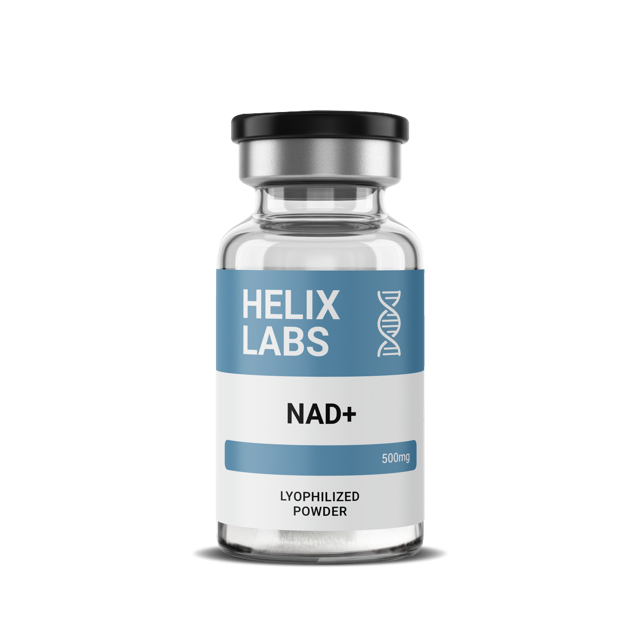
NAD⁺ (Nicotinamide Adenine Dinucleotide) – 500mg
For laboratory research applications only.
NAD⁺ is a naturally occurring coenzyme found in all living cells and is extensively studied in biochemical and cellular research. It plays a central role in redox reactions, energy metabolism, and enzymatic activity. In laboratory settings, NAD⁺ is utilized to investigate metabolic pathways, mitochondrial function, and cellular signaling processes.
Technical Specifications
| Feature | Details |
|---|---|
| Purity | ≥99% (Validated by HPLC) |
| Concentration | 500mg per vial |
| Molecular Formula | C₂₁H₂₇N₇O₁₄P₂ |
| Molecular Weight | ~663.43 g/mol |
| Synonym | β-Nicotinamide Adenine Dinucleotide (oxidized form) |
| Physical Form | White to off-white lyophilized powder |
Key Product Features
Essential Coenzyme:
NAD⁺ is a critical cofactor in oxidation-reduction (redox) reactions, widely used in metabolic and enzymatic research.
COA Verified:
Each batch undergoes HPLC and Mass Spectrometry analysis to ensure high purity and consistency for reproducible experimental results.
High Stability Format:
Lyophilized and sealed to preserve compound integrity under proper laboratory storage conditions.
Mechanism of Action (Research Context)
NAD⁺ is investigated in controlled experimental environments for its biochemical roles:
Redox Reactions:
Serves as an electron carrier in oxidation-reduction reactions, essential for studying cellular energy transfer processes.
Enzymatic Cofactor Activity:
Utilized in research involving NAD⁺-dependent enzymes such as dehydrogenases and polymerases.
Cellular Signaling Research:
Applied in studies examining pathways involving sirtuins, PARPs, and other NAD⁺-dependent regulatory proteins.
Research FAQ
How should NAD⁺ be stored?
Store lyophilized powder at 2–8°C for short-term use. For long-term storage, keep at -20°C. Protect from light, heat, and moisture.
What is the recommended reconstitution procedure?
- Solvent: Sterile Water or buffer solution (e.g., PBS)
- Standard Dilution: Add appropriate volume based on experimental concentration requirements
- Handling: Gently add solvent and swirl until fully dissolved. Avoid vigorous agitation.
What distinguishes NAD⁺ from NADH in research?
NAD⁺ is the oxidized form, while NADH is the reduced form. Research often focuses on their interconversion in metabolic and energy-producing pathways.
Compliance Notice
For research use only. Not for human consumption.
This product is intended strictly for laboratory research purposes.
Not for human or animal consumption, injection, or therapeutic use.